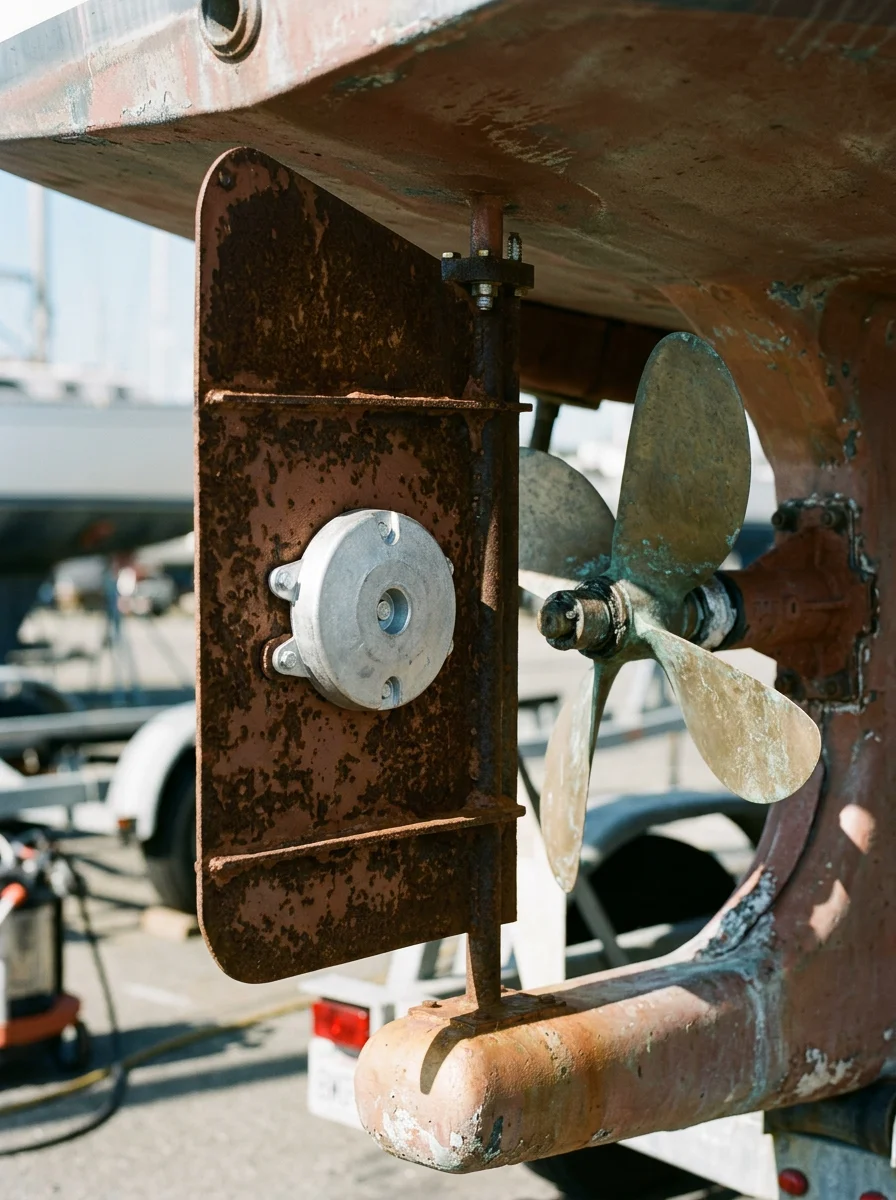
Zinc Anode Replacement
Galvanic corrosion is an electrochemical process that damages steel hulls when dissimilar metals are electrically connected within seawater. In this environment, different metals have distinct electrochemical potentials, and when two metals with different positions in the galvanic series come into electrical contact with an electrolyte like seawater, an electrical potential difference drives electrons from the more active metal toward the less active one. The result is that the more anodic metal corrodes preferentially while protecting the cathodic metal from corrosion.
Zinc anodes serve as sacrificial protectors specifically because zinc sits higher in the galvanic series than steel - meaning it's naturally more electrochemically active and will give up electrons to the hull structure before the steel does. This process, called cathodic protection, creates a complete electrochemical cell where the zinc corrodes instead of your expensive vessel's steel material. Without this sacrificial protection, oxygen exposure in combination with electrolyte conductivity causes natural corrosion reactions at the steel-water interface that progressively reduce hull thickness over time.
The effectiveness of zinc anodes depends on proper installation and regular replacement because once they corrode beyond their designed service life, their ability to maintain protective current decreases significantly. A depleted anode cannot generate sufficient electrochemical potential to continue protecting the hull, leaving it vulnerable to galvanic corrosion that damages structural steel faster than expected. This means that even zinc appearing reasonably sized may have lost substantial capacity through natural wear, exposing the vessel to accelerated deterioration rather than maintained protection levels.